Newfoundland: Fjords, Cliffs & Great Tables
This is where the landscape opens up—and where you begin to feel just how far you’ve come.
Of the four journeys Great Earth Expeditions operates, this one asks the most and returns the most. Over seven days, you’ll cross the open ocean by ferry, move up the west coast of Newfoundland, and spend three nights based in Gros Morne National Park—one of the most geologically significant and visually dramatic landscapes in North America. Cliffs that rise several hundred metres from the sea. A fjord carved by glaciers that retreated ten thousand years ago. A mountain hike that puts you above everything, looking out over a terrain so ancient and so vast it recalibrates your sense of scale entirely.
This journey moves through more ground than any other in the collection—ferry crossings, national park access, longer days on the road between places that genuinely feel remote. That sense of travel between worlds is not incidental; it’s the point. You don’t stumble into Gros Morne. You earn it.
This journey is fully all-inclusive from departure in Halifax to your final drop-off at Deer Lake Airport: every meal, every activity, all accommodations, all ferry passage, and all ground transportation are covered. There is nothing to coordinate and no reason to reach for your wallet. Your role is simply to be present.

What’s included—everything
All-inclusive means exactly that. From the moment you depart Halifax to drop-off at Deer Lake Airport, the following are fully covered:
- All ground transportation throughout the journey
- Ferry crossing of the Cabot Strait, from North Sydney to Port aux Basques
- 6 nights’ accommodation across Cape Breton, Port aux Basques, Corner Brook, and three nights in Norris Point
- All meals—breakfasts daily, all lunches, and six dinners
- All guided activities: sailing on the Bras d’Or Lake, Marble Mountain Zipline, Green Gardens Trail hike, Western Brook Pond boat tour, sea kayaking on Bonne Bay, and the full-day Gros Morne Mountain hike
- National park fees and activity reservations throughout
- Both owners guiding for the entire tour
No hidden costs, no optional add-ons, no awkward wallet moments. The logistics on a journey of this scope are genuinely complex—ferry schedules, park access windows, tide-dependent activities—and every element is managed in advance and handled throughout.
What sets this journey apart
- Travel from Nova Scotia to Newfoundland, including a Cabot Strait ferry crossing
- Experience the Bras d’Or Lake by guided sailing excursion with Amoeba Tours
- Spend a night on Newfoundland’s southwest coast in Port aux Basques—the island’s first impression
- Explore the west coast from Corner Brook to Gros Morne National Park
- Take on a high-energy zipline experience at Marble Mountain, above the Humber Valley and Steady Brook Falls
- Hike the Green Gardens Trail, where coastal cliffs, sea stacks, and open meadow converge
- Boat deep into the fjord of Western Brook Pond—one of Canada’s most iconic and inaccessible landscapes
- Take on the Gros Morne Mountain hike, one of the park’s most demanding and rewarding full-day routes
- Paddle the sheltered waters of Bonne Bay by sea kayak
- Spend three nights based in Norris Point—long enough to settle into the rhythm of the park
- Travel in small, intimate groups, never coach-style, with both owners guiding and never more than six guests per guide
Guided by both of us, every departure
We guide every departure of this journey ourselves, from pickup in Halifax to the ferry crossing to all three days in Gros Morne National Park.
A trip of this scope involves moving parts that most travellers never see: ferry departures that don’t wait, park trail conditions that change with the weather, a mountain hike that requires sound judgment about when to go and when to hold. We manage all of it in real time, not from a script, but from experience.
With both of us on every departure and a maximum of 12 guests, the ratio is never more than six guests per guide. On this journey that is not a comfort, it is what makes the itinerary possible. Day 6 splits: one of us on the summit, one on the Tablelands, and nobody sitting in a lodge waiting.
Day By Day
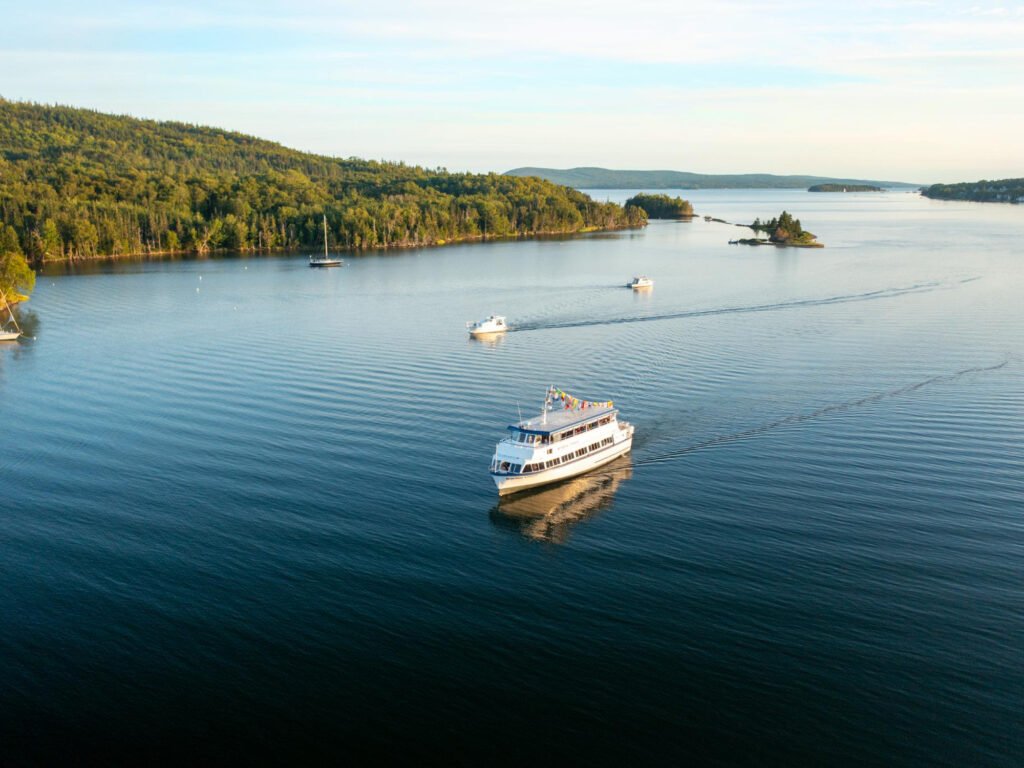
Day 1 — Halifax to Cape Breton
Halifax → Baddeck → North Sydney
Travel north from Halifax toward Cape Breton, arriving in Baddeck—set along the shores of the Bras d’Or Lake. Before the journey turns toward the open ocean and Newfoundland’s west coast, there’s a moment here worth taking.
Step aboard with Amoeba Tours for a guided sailing excursion on the Bras d’Or Lake. Still water, open views, and an unhurried afternoon—it’s a deliberately calm counterpoint to what’s ahead, and a fitting way to ease into seven days of movement.
Continue to North Sydney and settle in ahead of the morning crossing.
ACCOMMODATION
A comfortable, well-positioned property in North Sydney—chosen for its practicality and proximity to the ferry terminal. This is a transit night; the journey begins in earnest tomorrow.
DINNER
A relaxed first evening—good food, an early night, and the knowledge that by this time tomorrow you’ll be standing in Newfoundland.
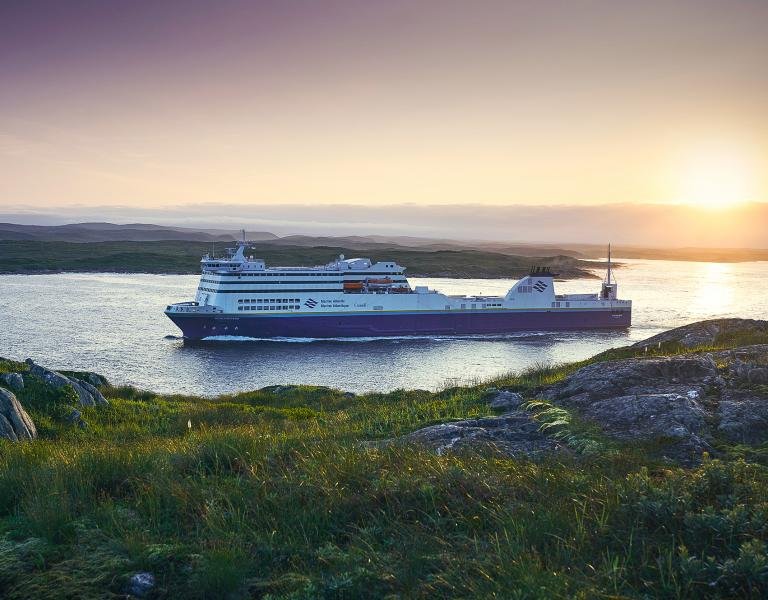
Day 2 — Crossing to Newfoundland
North Sydney → Cabot Strait → Port aux Basques
Board the ferry in North Sydney and cross the Cabot Strait—roughly six hours of open water between Nova Scotia and the island of Newfoundland. This is not a transfer to be managed or waited out. It’s one of the defining passages of the journey.
The Cabot Strait is wide, often rough, and genuinely open ocean. The deck gives you a horizon in every direction and a growing sense that you are moving toward something remote. By the time Port aux Basques appears on the western edge of the Newfoundland coast, the landscape has already begun to make its first impression—exposed, windswept, and nothing like what you left behind.
Arrive in Port aux Basques and settle in for the evening.
ACCOMMODATION
A comfortable property in Port aux Basques, chosen for setting and quality. Your first night on the island.
DINNER
An introduction to Newfoundland’s west coast table—fresh, local, and unpretentious in the best sense. The island announces itself here.
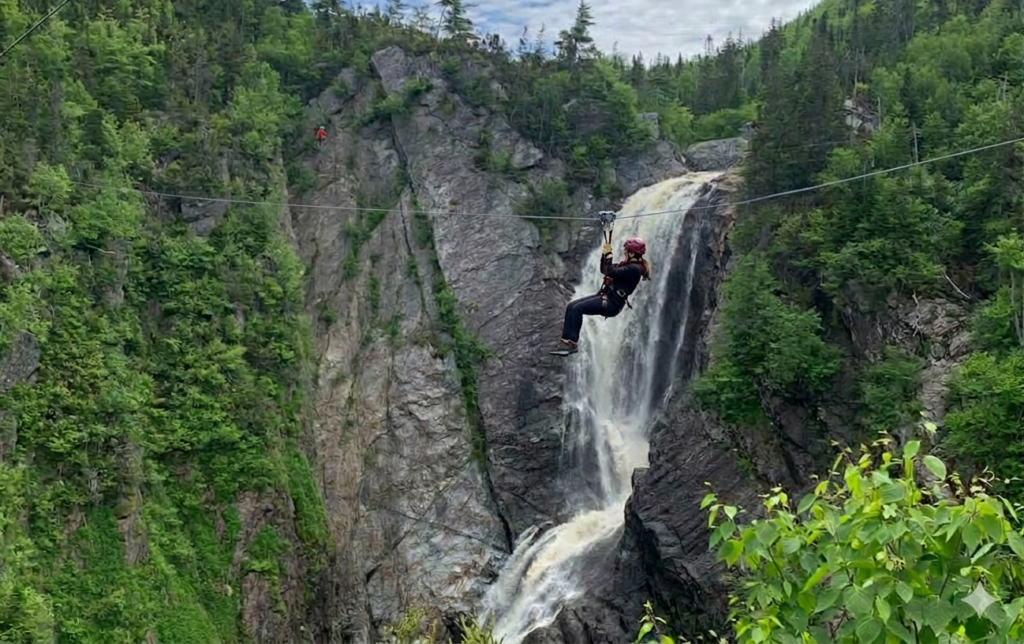
Day 3 — Into Western Newfoundland
Port aux Basques → Corner Brook → Marble Mountain
Travel north from Port aux Basques toward Corner Brook, where the terrain begins to build and the scale of western Newfoundland starts to become apparent. The drive itself is part of the experience—open country, long sightlines, and a landscape that feels genuinely unhurried.
At Marble Mountain, take on the zipline park above the Humber Valley. It’s a different register from the hiking and paddling days ahead—faster, more kinetic, and positioned with wide views over forested slopes and the valley below. A high-energy afternoon before the pace shifts toward the park.
The evening allows time to settle into Corner Brook before the journey moves into Gros Morne.
ACCOMMODATION
A well-located hotel or inn in Corner Brook, selected for comfort and setting. Confirmed at booking.
DINNER
A grounded evening meal in Corner Brook—locally sourced and unhurried, with the best days of the journey still ahead.
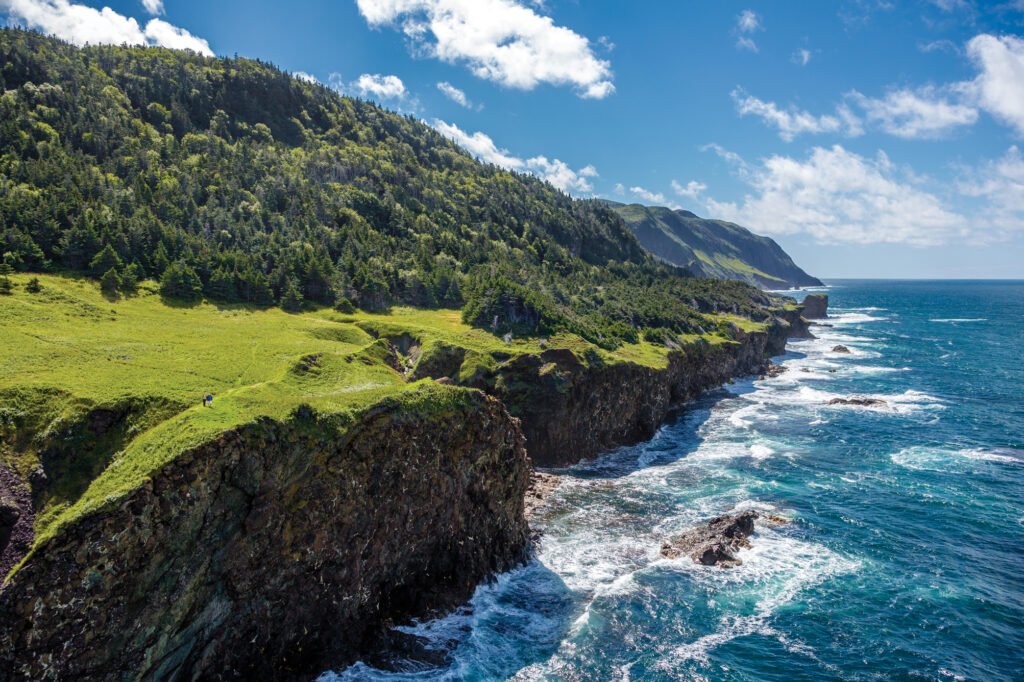
Day 4 — Into Gros Morne & the Green Gardens Trail
Corner Brook → Green Gardens Trail → Norris Point
Travel into Gros Morne National Park, and feel the landscape change as you go. By the time you reach Norris Point—positioned along the shores of Bonne Bay, with the Gros Morne peaks visible across the water—it becomes clear why this place holds UNESCO World Heritage status. The geology here is among the most significant on the planet. The scenery makes a more immediate argument.
Settle into Norris Point, your base for the next three nights. Then set out on the Green Gardens Trail: a route that descends through boreal forest and open meadow before arriving at a dramatic stretch of coastline shaped by sea stacks, cliffs, and the cold North Atlantic. It’s one of the park’s most rewarding hikes, and a strong opening statement for what the next three days will deliver.
ACCOMMODATION
A carefully selected inn or lodge in Norris Point—chosen for its connection to the landscape and its quality of comfort. Three nights here. Confirmed at booking.
DINNER
Your first dinner in Gros Morne—a strong introduction to what the park’s best tables do with local ingredients. Bonne Bay provides; the kitchens here know what to do with it.
Day 5 — Fjords & Coastal Waters
Western Brook Pond → Bonne Bay
This is the day most guests point to afterward.
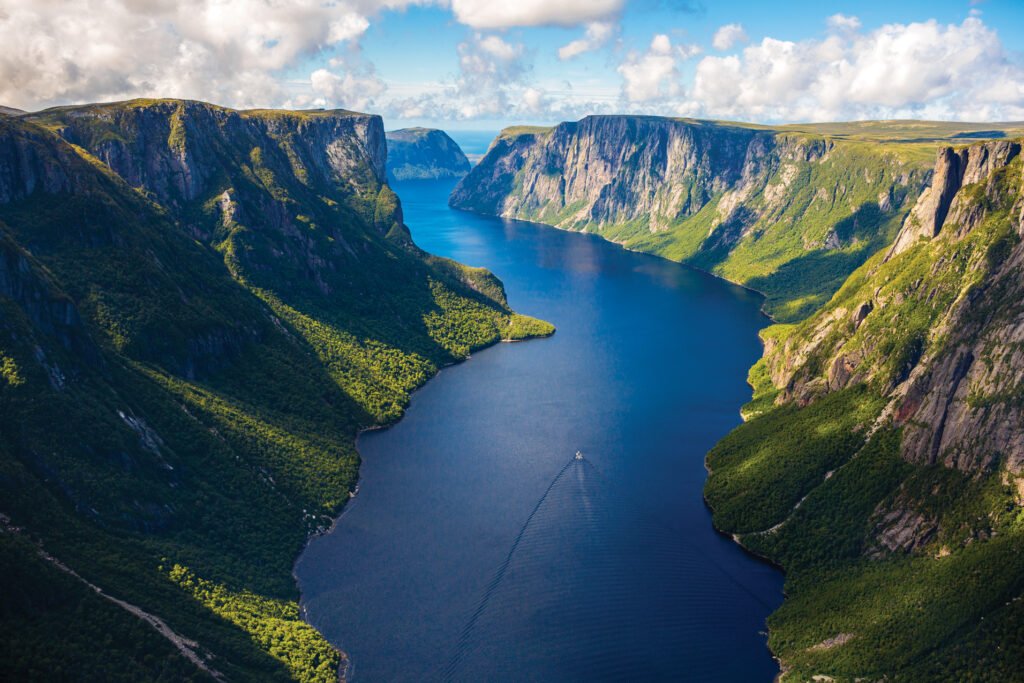
Travel to Western Brook Pond and board a boat into the fjord. The numbers are stark: cliffs rising over 600 metres from the water, a lake 165 metres deep, carved by glaciers that retreated ten thousand years ago and now landlocked—technically a freshwater fjord, one of only a handful on earth. No description prepares you for the scale of it. The boat moves slowly, the walls rise on both sides, and at some point the conversation tends to stop.
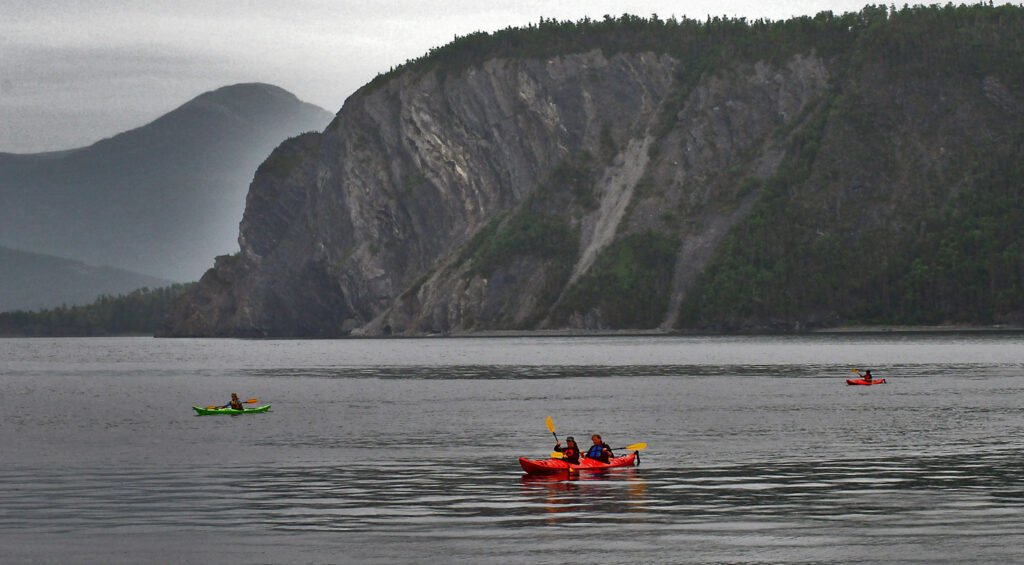
In the afternoon, shift to a different relationship with the water. A guided sea kayaking excursion in Bonne Bay puts you at surface level—paddling through sheltered inlets with the park ridgeline above you, close to the coastline in a way the boat tour cannot offer. Two experiences, two entirely different scales. Both necessary.
DINNER
A relaxed and memorable evening back in Norris Point—the kind of dinner that follows a day like this and doesn’t try to compete with it. Good food, good company, time to take it in.
Day 6 — Gros Morne Mountain
Gros Morne Mountain → Norris Point
The defining day of the journey—and the one that demands the most.
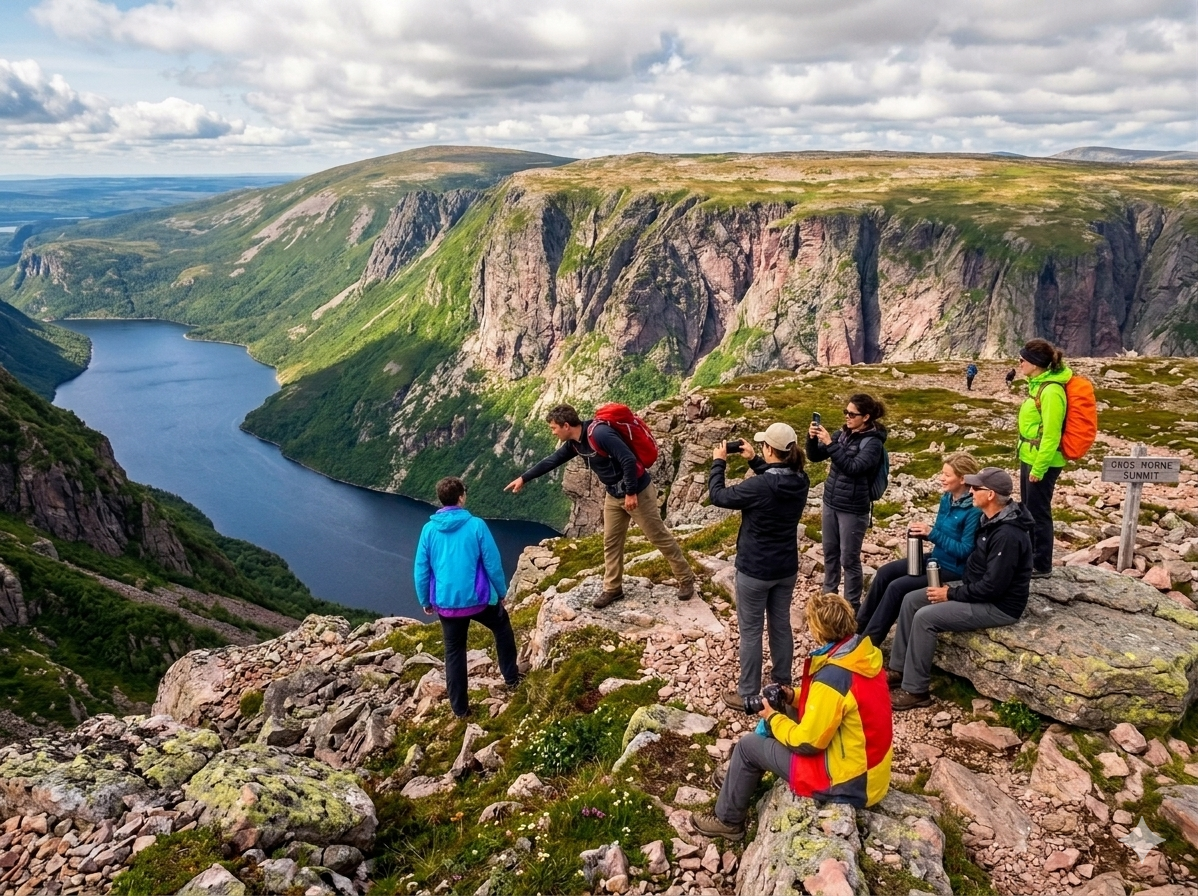
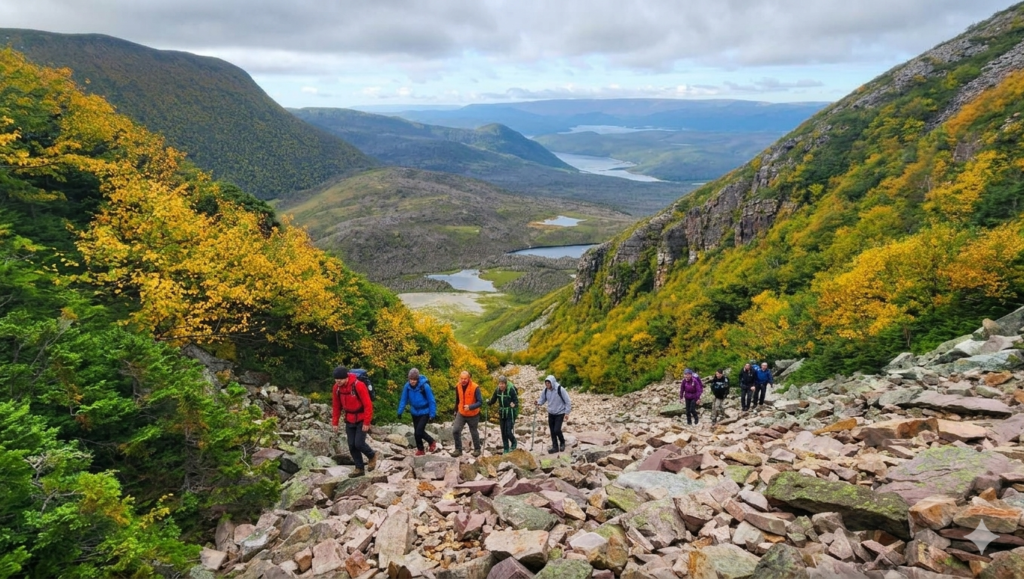
The Gros Morne Mountain hike is a full-day effort: a sustained climb through boreal forest that gives way to open, rocky terrain above the treeline, with the mountain’s distinctive flat summit emerging as the forest falls away behind you. The summit sits at 806 metres. The views from it extend across the park, the fjords, Bonne Bay, and the Gulf of St. Lawrence beyond.
It’s a challenging day. Expect six to eight hours on the mountain, variable weather, and terrain that requires solid footing and a steady pace. It’s also one of the most physically and emotionally rewarding experiences this part of the world offers. We will brief you on conditions the evening before and make the call on the day.
Return to Norris Point in the late afternoon.
DINNER
The closing dinner in Gros Morne, and one of the best of the journey. After a day like this, the meal that follows carries its own weight—well-earned, unhurried, and reflective of everything the last three days have been.
Day 7 — Final Views & Departure
Norris Point → Southeast Brook Falls → Deer Lake Airport
Your final morning moves at a gentler pace—a fitting close after six days of sustained activity.
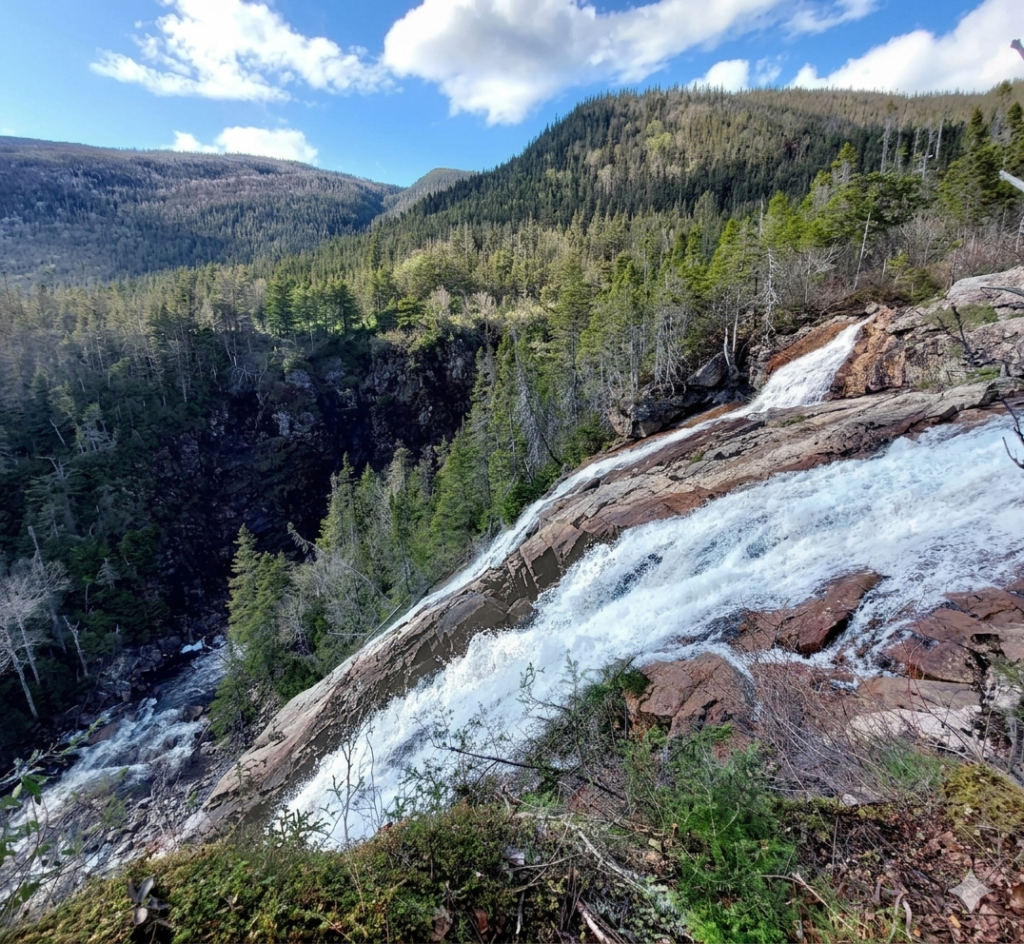
En route to Deer Lake, stop at Southeast Brook Falls, where a short walk leads to a waterfall cascading through a gorge into Bonne Bay. It’s a quieter, more intimate landscape than anything you’ve stood in over the past two days—close, detailed, and beautiful in a way that feels like a deliberate final note. The kind of place you might have walked past on another kind of trip.
Continue to Deer Lake Airport for departure. The journey ends here, but the sense of scale it leaves behind tends to linger considerably longer.
Where You'll Stay
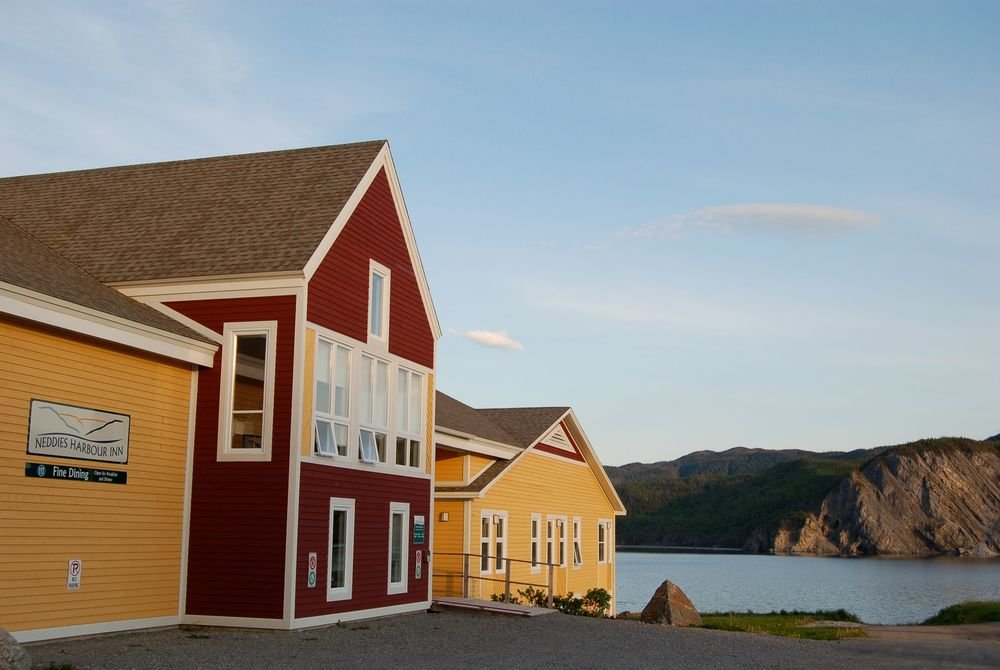
This journey moves through distinct regions, and the accommodations reflect that. Each night’s property is chosen for its setting, its comfort, and its connection to where you are—from a well-positioned inn near the North Sydney ferry terminal to the character lodges and inns of Norris Point, where Bonne Bay and the Gros Morne peaks form the view from the window.
Three nights in Norris Point are the heart of the journey’s accommodation. Staying in one place for that duration allows you to settle in properly—to wake up in the park, return to the same table in the evening, and feel like a temporary resident rather than a tourist passing through. The properties here are chosen because they belong to Gros Morne in the way only a few places do.
Specific properties are confirmed at booking and may vary by season and availability. What doesn’t vary is the standard: well-located, well-run, and genuinely reflective of where you are.
Dining
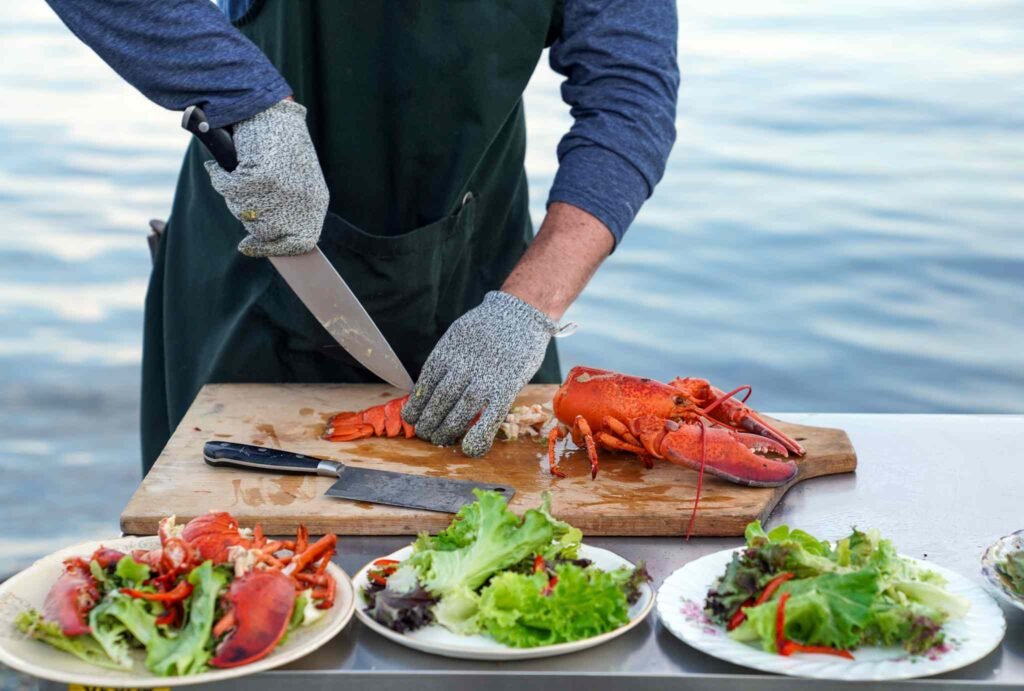
Newfoundland’s food culture has undergone a quiet transformation over the past decade—driven by chefs and producers who take the island’s larder seriously. Salt cod, bakeapple, snow crab, Bonne Bay mussels, and wild game prepared with the same care you’d find in any serious kitchen. The best of it tastes specifically and unmistakably like Newfoundland, and you won’t find it anywhere else.
Each dinner is chosen to reflect the region you’re in that evening—locally sourced, thoughtfully prepared, and matched to the character of the day. After a full-day hike on Gros Morne Mountain, the meal that follows deserves to be more than an afterthought; it’s the moment the day settles into something complete. That’s the standard we hold each dinner to across all seven days.
Specific restaurants and menus are confirmed at booking and may vary by season and availability. Dietary requirements are accommodated with advance notice.
Who travels with us
This journey is for a specific kind of traveller—and it’s worth being honest about that.
They’re drawn to landscapes that require something of you: distance, effort, physical commitment. They’re comfortable with longer days on the road and a genuine sense of travelling between worlds rather than between highlights. The Gros Morne Mountain hike is a full-day physical effort on demanding terrain, and they’re not only willing to take it on—they’re drawn to that as the centrepiece of the journey.
They’ve likely done serious independent travel before and understand what it takes to pull something like this together on your own: ferry logistics, park access, trail conditions, accommodation across five different stops. They choose a guided journey not because they can’t manage those details, but because they understand what it’s worth to hand them off entirely—and what local knowledge unlocks in a landscape this complex and this remote.
They also know how to sit down to a good dinner at the end of a hard day and appreciate it for exactly what it is.
If you want to cross the open ocean, hike to the summit of one of Canada’s great national parks, boat into a landlocked fjord, and come home with a felt sense of just how far the edge of the world actually is—this journey was built for you.
Frequently Asked Questions
Your Departure
Will my departure actually run?
This journey works differently from our others, and we’d rather explain why than bury it.
Our Nova Scotia journeys carry a Guaranteed Departure promise — once you’re booked, they run. Newfoundland can’t. A Cabot Strait ferry crossing for the group and vehicle, six nights across five locations, and national park bookings committed well in advance mean this journey can’t be operated for one or two guests.
So Newfoundland confirms at four guests. Here is exactly how that works:
● Ask us how many are booked and we’ll tell you. Any time, straight answer.
● Once we reach four, the departure is confirmed and everyone booked hears from us that day.
● If we haven’t reached four by 120 days before departure, we’ll contact you and you choose — a full refund including your deposit, a transfer to any other 2027 journey with the price difference adjusted either way, or hold your place in case numbers arrive.
● We will never take your final payment on an unconfirmed departure.
With two departures and twelve seats each, four is a low bar. But it’s a real one, and you should know it exists before you book flights.
When do the 2027 departures run, and how far in advance should I book?
Two departures: August 22 and September 5.
Each caps at 12 guests — 24 seats for the season. Book early if your dates are fixed. Booking early also helps the departure reach its four-guest minimum sooner, which benefits everyone already holding a place.
Is August 22 different from September 5?
Very little. Both sit in the best window of the Newfoundland season — settled weather, the bugs finished, the summer crowds thinning, and the park still fully operational.
September runs slightly cooler and slightly quieter. Neither is the better trip; book whichever suits your calendar.
How many people will be on my departure?
A maximum of 12 guests, and a minimum of 4. Pam and I both travel with every group, which puts the ratio at one guide to six guests at most.
On a journey with this much logistics and a split-group day on the mountain, two guides isn’t a luxury — it’s what makes the itinerary possible.
Is this journey adults only?
Yes. Our signature journeys are designed for adult travellers, and this one more than most — the pace, the distances, and the physical demands all reflect that.
If you’re travelling as a family with children or teens, we’d like to talk. A custom journey lets us build western Newfoundland around a different group. Get in touch and we’ll design something that works.
I'm travelling solo. Is there a supplement?
Solo travellers are welcome. The single occupancy supplement is $795 USD, inclusive of all applicable fees and taxes, and covers private accommodation for all six nights.
Can we book this journey privately?
Yes. With a group of six or more we can run this journey as a private departure on dates that suit you, with room to adjust the pace and emphasis. A private booking also removes the minimum-guest question entirely. Get in touch and we’ll work it out.
Getting There & Getting Around
Where does the journey start and end?
This journey does not return to Halifax. We depart Halifax on Day 1 and finish at Deer Lake Airport, Newfoundland, on Day 7.
That means you’ll fly into one airport and home from another. When you book, look for the “multi-city” option rather than a return ticket — it’s usually cheaper than two separate one-way flights and it keeps your connections protected.
When should I book my flights?
Arriving: come into Halifax the day before Day 1. Day 1 shouldn’t begin with a red-eye, and a delayed flight on the morning of would cost you the start of the journey. That night is yours to arrange — the journey price covers the six nights between, not the night before.
Departing: book an afternoon or evening flight out of Deer Lake on Day 7. Three or four daily departures to Toronto fit comfortably — we finish the morning at Southeast Brook Falls and have you at the airport with time in hand. No extra night needed at this end.
If you’re travelling from Europe, note that a Deer Lake departure won’t connect you home the
same day. Plan an overnight in Toronto, Montreal, or Halifax on the way back.
Send us your flight details at booking and we’ll confirm the timing works before you’re committed.
Do we change accommodations during the journey?
Usually not. We aim to keep you in one property for all three nights so you unpack once and the days stay uncluttered. During peak season, availability occasionally requires splitting across two properties. If that applies to your departure, you’ll know before you book — not on arrival.
Why does it take three days to reach Gros Morne?
Because that’s how far away it is, and because getting there is part of the journey rather than an obstacle to it.
Day 1 takes you through Cape Breton with an afternoon sailing on the Bras d’Or Lake. Day 2 is the Cabot Strait crossing. Day 3 moves up the west coast to Corner Brook with the zipline above the Humber Valley. Each has something in it — but yes, these are days of movement, and you should know that going in.
What it buys you is three full nights based in Norris Point, inside the park, with the peaks across Bonne Bay from your window. Flying directly into Deer Lake would save two days and cost you the sense of distance that makes Gros Morne land the way it does.
How often do we change accommodations?
Five properties across six nights: North Sydney, Port aux Basques, Corner Brook, then three nights in Norris Point.
The first three are one-night stops dictated by geography — you’re crossing an ocean and travelling several hundred kilometres. The heart of the journey is Norris Point, where you unpack once and stay put for three nights inside the park.
Your luggage is handled throughout. You’ll never carry a bag further than the vehicle.
Will I have cell service?
Patchy, and less than you’re used to. Corner Brook and Norris Point have coverage. Gros Morne’s trails, much of the Route 430 corridor, the Tablelands side, and the ferry crossing have little to none.
Your accommodations have wifi. If you need to be reachable at a particular time, tell us and we’ll make it work.
What should I pack?
More than for our Nova Scotia journeys, and warmer.
Essential: proper hiking boots with ankle support and grip — trainers are not adequate for Gros Morne Mountain. A waterproof shell you’d actually hike in. Warm mid-layers; the summit plateau is exposed and cold even in August. Hiking poles if you use them, particularly for the descent.
Also: quick-drying clothes and a change of clothes for the kayak, a daypack for the mountain day, and layers you can shed. Newfoundland weather changes fast and often.
Evenings are relaxed — no dress code anywhere on this journey.
What's Included & How You Pay
What does "fully all-inclusive" actually cover?
Everything from pickup in Halifax to drop-off at Deer Lake Airport: the return Cabot Strait ferry
crossing, six nights’ accommodation, all ground transportation, every meal — breakfasts, lunches, and six dinners — all guided activities, national park fees and reservations, and both of us as your guides throughout.
Not included: alcoholic beverages, gratuities, travel insurance, your flights to Halifax and from Deer Lake, and your hotel in Halifax the night before Day 1.
Why is this journey so much more expensive than the others?
Seven days rather than four or five, for a start. Beyond that: a return ocean ferry crossing for the group and vehicle, six nights across five properties, national park fees and advance activity bookings, and several hundred kilometres of ground travel through genuinely remote country.
Newfoundland costs more to operate than anywhere else we go, and the price reflects that rather than a premium on the experience.
What's the payment schedule?
Your reservation is confirmed with a $250 USD deposit. The balance is then divided into three equal payments, due at 135, 90, and 45 days before departure.
There’s no premium for paying over time — it’s simply how every booking is structured. If you book within 135 days of departure, the schedule compresses to the milestones remaining, with full payment still due 45 days out.
On this journey, no payment beyond your deposit is taken until the departure is confirmed at four guests.
Cancellation & Insurance
What's your cancellation policy?
Cancel more than 45 days before departure and every payment you’ve made is refunded in full, less the $250 booking deposit, which is non-refundable.
At 45 days, final payment is due and bookings become non-refundable. That’s the point where we’ve committed to accommodations, ferry passage, operators, and park reservations on your behalf — commitments that can’t be unwound.
It’s also exactly why we require travel insurance. A comprehensive policy covers the circumstances that lead most people to cancel — illness, injury, a family emergency — and that’s the reason we ask every guest to carry one. The 45-day mark is the moment your insurance matters, not ours.
Full cancellation terms and the liability waiver are presented through our booking platform before you complete your reservation.
What if you cancel the journey?
If we’re forced to cancel a departure — whether for circumstances outside our control or because the four-guest minimum isn’t met — you choose: a full refund of every payment you’ve made, including the deposit, or transfer your booking to any other 2027 journey, subject to availability, with any difference in price adjusted either way.
Is travel insurance required?
Yes. Comprehensive travel insurance including trip cancellation and medical coverage is required for all guests.
We don’t work with a preferred provider — choose a policy that suits your circumstances. If you’re travelling from outside Canada, confirm it covers medical treatment here. Buy it when you book rather than later; most cancellation coverage is strongest when purchased close to your initial deposit.
Worth noting for this journey specifically: you’ll be booking flights into Halifax and out of Deer Lake. Make sure your policy covers those independently of the journey itself
Fitness & Fit
How fit do I need to be for this journey?
This is the most demanding journey we run, and it’s worth being straight about what that means.
Most days ask for two to four hours on your feet over uneven ground — the Green Gardens Trail, the walk in to Western Brook Pond, coastal trails around Bonne Bay. That’s manageable for anyone who walks regularly. Day 6 is different: the Gros Morne Mountain summit is a full-day effort on demanding terrain, and it’s the centrepiece of the journey for the people who come for it.
The summit is optional. See below. But if the idea of a hard mountain day holds no appeal at all, one of our Nova Scotia journeys is likely the better fit, and we’d tell you so rather than sell you this one.
How hard is the Gros Morne Mountain hike, really?
Hard. Roughly 16 km, about six to eight hours, with a summit at 806 metres.
The route climbs gradually through boreal forest, then ascends a steep gully of loose rock — the demanding section, and the one that decides whether this hike is for you. Above it, the terrain opens onto bare arctic-alpine plateau with views over Ten Mile Pond, the fjords, Bonne Bay, and the Gulf of St. Lawrence. The descent is long and also on loose ground.
It requires sound footing, steady pacing, and proper boots. It doesn’t require technical skill or a head for heights. Guests who hike regularly and are prepared for a long day finish it and remember it for years.
Your guide briefs the group the evening before and makes the final call on conditions in the morning.
What if I don't want to do the summit?
Then you do the Tablelands instead, and it isn’t a consolation prize.
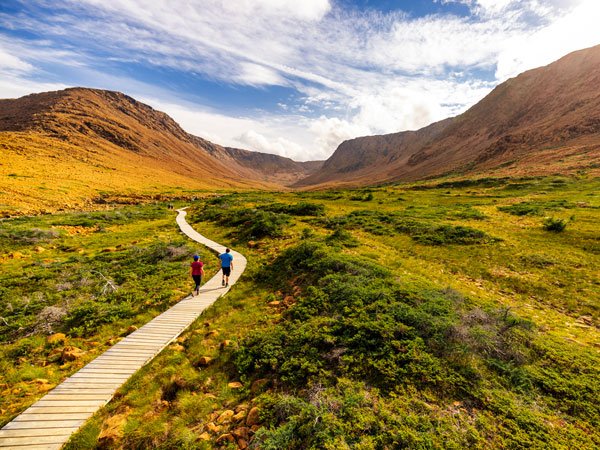
The Tablelands are the reason Gros Morne holds UNESCO World Heritage status — an exposed section of the earth’s mantle, forced to the surface by continental collision and left rust-coloured and almost barren because the rock won’t support ordinary plant life. It’s one of the few places on the planet you can walk on mantle rock. The trail itself is short and flat.
With two of us guiding, the group splits on Day 6: one guide on the mountain, one on the Tablelands, Woody Point, and Trout River Pond. Both are full days. Nobody’s plan is decided by anyone else’s, and nobody sits in a lodge waiting.
Tell us at booking if you already know which you want, or decide that morning. Both are fine.
How much walking is there at Western Brook Pond?
About 3 km each way to reach the boat, on boardwalk and packed gravel across the coastal plain. Flat and easy, but it’s 6 km round trip on top of the two-hour boat tour, and it catches people out who weren’t expecting it.
Wear proper shoes and allow for it being a half-day rather than a boat ride.
Can I sit out an activity?
Yes, on any day. With two of us guiding every departure we have real flexibility to split the group. Tell us the evening before wherever that’s possible.
The Ferry, The Water & Weather
What is the Cabot Strait crossing like?
Roughly six to seven hours of genuinely open ocean between North Sydney and Port aux Basques, on a large Marine Atlantic vessel with indoor seating, food service, and open deck.
The Strait can be rough. If you’re prone to motion sickness, take your preferred remedy before boarding rather than after, and plan to spend time on deck where the horizon is visible — it helps considerably more than sitting inside.
It’s also one of the better parts of the journey. Six hours of moving toward somewhere genuinely remote does something that a flight doesn’t, and by the time Port aux Basques appears you’ve earned the arrival.
What if the ferry is delayed or cancelled?
It happens — weather on the Cabot Strait can hold sailings, and Marine Atlantic’s decisions are entirely their own.
We book crossings with schedule margin built in, and the Day 3 itinerary between Port aux Basques and Corner Brook has flex in it. If a delay costs us time, we adjust what follows rather than compress everything. Your accommodations, park bookings, and activities are all handled by us — you won’t be rebooking anything.
A cancelled sailing that costs a full day is rare but possible. In that case we rebuild the remaining days around what’s still achievable and tell you honestly what’s been lost.
What happens if the weather closes the mountain?
We move to the Tablelands day for everyone, or reshuffle within the three days at Norris Point if there’s a better window.
Gros Morne Mountain in low cloud gives you a hard climb and no view, and in wet conditions the gully becomes genuinely unsafe. Your guide makes that call, and it isn’t negotiable — but with three full days in the park there’s usually room to move things rather than lose them.
Do I need kayaking experience?
No. The paddle on Bonne Bay is guided, in sheltered water, with instruction provided. First-time
paddlers are common.
Expect to get somewhat wet. Wear quick-drying layers rather than cotton and bring a change of clothes.
Do I have to do the zipline?
No. It’s an optional afternoon at Marble Mountain, and guests who’d rather skip it spend the time in Corner Brook instead.
It’s a dramatic ride over the Humber Valley and the people who do it tend to enjoy it more than they expected. But it’s the one high-adrenaline element in an otherwise landscape-driven journey, and there’s no expectation either way.
Are there bugs?
Not meaningfully on these dates. Blackflies and mosquitoes are a real feature of a Newfoundland June and July; by late August they’ve largely finished, and September is clear. Bring repellent for the forested sections and you’ll rarely need it.
Food
I have a dietary restriction. Can you accommodate it?
Yes, with advance notice — and advance notice matters more here than anywhere else we operate. Kitchens in Port aux Basques and Norris Point are small and supply lines are long. Tell us at booking and it’s handled; tell us on the night and it may not be.
Serious allergies are arranged directly with each property before you arrive.
Why Travel Guided
How is this different from doing it ourselves?
You could do it yourself. It’s the most work of any trip we run.
Ferry sailings that don’t wait and book out in summer. Park activity reservations that sell through weeks ahead. Accommodation across five stops in places with limited inventory. Trail conditions on Gros Morne Mountain that decide, on the morning, whether the day is safe. Several hundred kilometres of driving through country where a wrong assumption about distance costs you an afternoon.
We’ve already solved all of it, and there are two of us on the ground to split the group when the mountain day comes. What you’re buying is seven days in one of the great landscapes of North America with none of the machinery in your way.
From Wild Coasts to Great Tables
guided journeys through Atlantic Canada’s most remarkable landscapes.

Newfoundland
Fjords, Cliffs & Great Tables
$5,650 USD
Per Person - Includes all applicable taxes and fees
7 Days / 6 Nights
Max 12 Guests
Departing From halifax
Minimum 4 Guests to Confirm
Gros Morne National Park
2027 Departures
AUG
22
SEPT
5
Reserve Your Spot
A $250 USD deposit secures your reservation. The remaining balance is split into three interest free payments.