Cape Breton in the Off-Season: What Only Locals Know
Ask anyone who lives on Cape Breton Island when they would choose to travel it, and almost nobody says July. They say late September. Some say the first two weeks of June. Almost none of them say the peak weeks when the island is fullest, which is precisely when most visitors arrive.
This is not contrarianism. The shoulder season here is genuinely better on most of the measures that matter, and the tradeoffs are smaller than people expect. Here is what locals actually know about it.
The Light Changes Completely
The single most underrated argument for September and October is the sun angle. Summer light on the Cabot Trail is high and flat through the middle of the day, which is the worst possible condition for a landscape defined by depth: layered headlands, valleys running down to the water, forest texture on the highland slopes.
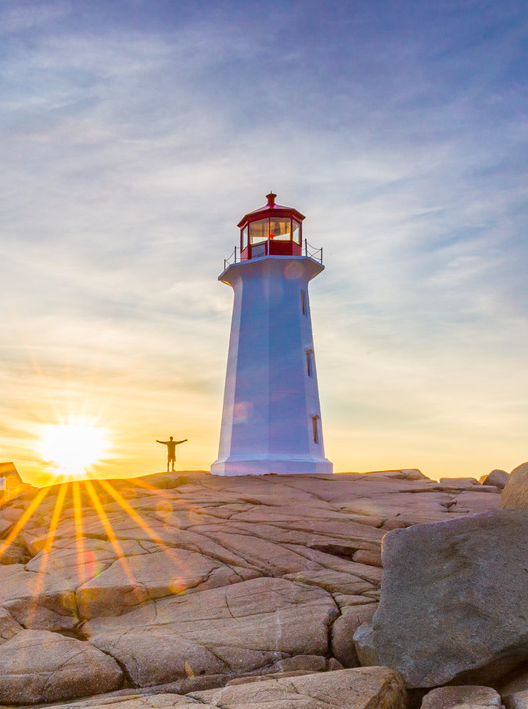
By late September the sun sits lower for far more of the day. Shadows lengthen, the headlands separate visually instead of flattening into one another, and the window of good light stretches from mid-afternoon to sunset rather than collapsing into twenty minutes. Anyone travelling with a camera notices this immediately. Anyone travelling without one still ends up looking at a better version of the same coastline.
Autumn Colour Is Not a Marketing Line Here
The Cape Breton Highlands hold a hardwood forest of sugar maple, yellow birch, and beech that produces genuine colour, and the elevation range means the change moves down the slopes over several weeks rather than arriving and vanishing in a single window.
Peak on the highland plateau typically runs early to mid October, with the lower coastal areas following later. What this means practically is that a well-timed trip can catch colour at some elevation for a stretch of two or three weeks rather than requiring a single lucky weekend. Fog rolling through a partly coloured highland valley is a specific and fairly common sight in that window, and it does not photograph like anything else in the province.
The Wildlife Gets Easier
Moose are more active and more visible in autumn as the rut approaches, and they spend more time in the open than they do during the heat of midsummer. Early morning and late afternoon along the highland stretches of the trail are the productive times, and the reduced traffic means you can actually stop when you see something.
On the water, the whale season runs into the autumn on the Gulf side. Pilot whales and minkes remain present, and fin whale sightings actually tend to improve as the summer progresses rather than tailing off. Boats are less full. Trips are less likely to be booked out.
Bald eagle density on the island is high year-round, and they are easier to spot once the leaves begin to thin.
The Trails Empty Out
The Skyline Trail in August is a queue. The Skyline Trail on a Tuesday in early October is a different experience of the same ground. That pattern repeats across every popular trailhead on the island: parking that fills by nine in summer sits half empty, and the trails that were pleasant but crowded become genuinely quiet.
This matters more for wildlife than for solitude. A quiet trail is a trail where things do not hear you coming.
Late Spring Is the Other Answer
The less discussed shoulder is the first half of June, and it has its own case.
Waterfalls and brooks run hard after the spring melt, which is when the brook trails on the island are at their best. Moose are visible and calves appear. Whale season is beginning. The forest is in new leaf, which is a specific green that does not last. And the island is quiet in a way that will not repeat until October.
The tradeoff is real: the highland weather is less settled, some services are still ramping up for the season, and black flies are a genuine consideration in the woods through much of June. Anyone hiking inland should plan for them rather than discover them.
Be Honest About What Closes
This is where shoulder season requires actual planning rather than optimism.
Cape Breton’s tourism infrastructure runs on a season, and it contracts at both ends. Restaurant hours shorten. Some seasonal accommodation and operators close entirely after the Canadian Thanksgiving weekend in mid October. In the smaller communities along the northern part of the trail, the gap between what is open in August and what is open in late October is substantial.
The practical consequences: verify what is operating before you rely on it, do not assume you will find dinner late in a small community, and carry more flexibility in the plan than you would need in peak season. None of this is difficult. It is just the part that catches people who assumed the island runs the same way year round.
Celtic Colours in October is the exception that proves the rule. During the festival week the island is busier than at almost any point in summer, and accommodation across the whole of Cape Breton books out well in advance.
The Weather Question
Autumn on the island is not reliably mild, and the highlands generate their own conditions. Expect fog, expect wind on the exposed headlands, and expect a wider daily temperature range than the coast suggests. Late September is often the sweet spot: cool enough for comfortable hiking, warm enough that a day outdoors does not require serious layering.
October brings more weather. It also brings the colour, so the trade is usually worth making. Pack for the highlands rather than for the forecast in Halifax, because they are frequently not the same day.
Why the Shoulder Suits Small Groups
There is a practical reason the shoulder season fits the way we run trips. Fewer people on the ground means more flexibility: the ability to stop when a moose appears rather than push on because a schedule demands it, to change a day’s hiking when the highland fog will not lift, or to spend an extra hour somewhere because nobody is waiting behind you.
That flexibility is difficult to exercise in August. It is the normal condition in late September.
Plan a Shoulder Season Trip
Our [Cape Breton journey] runs into the autumn for exactly these reasons, timed around light, wildlife, and colour rather than around the calendar’s busiest weeks. [Get in touch] and we will tell you what the island is doing when you are thinking of travelling.